
Weld County Arrest Warrants Explained
In Weld County, an arrest warrant is a court order that lets law enforcement take someone into custody. New cases begin with paperwork. An officer, prosecutor, or other authorized applicant brings a complaint, affidavit, or similar material to the bench. A District Court or County Court judge or magistrate then decides whether the law permits issuance. The public Weld County warrant search can show the order once it is entered in the system. It is not the affidavit or the full case file, though. City, federal, other-agency, sealed, protected, and not-yet-entered warrants can all sit outside public view. The issuing court controls the case itself. The sheriff or another sworn agency confirms and serves the warrant, and the jail handles booking and custody.
Weld Probable-Cause Documentation
The Weld County Sheriff's Office Patrol Manual spells out what warrant-support materials should contain. They should state probable cause, relevant dates and times, the affiant's training and experience, and the link between a place, evidence, or person. The manual also asks for a location description. It wants the items sought, plus any known facts that may weigh against the request. Together, these details let a judicial officer test the legal basis. Most never reach the public result card. A releasable affidavit or complaint must come from the court file or a proper records request. A sealed application may stay unavailable until the court allows access.
Record distinction: The sheriff card summarizes a known warrant. The complaint or affidavit supplies the supporting allegations and may have separate access limits.
Weld County's manual also covers search-warrant execution. That process differs from an arrest warrant, since a search warrant authorizes a search for described evidence rather than serving as a self-lookup arrest category.
Inside a Weld County Arrest Warrant
The public schema helps identify the court and the record. It cannot replace the live order. Formats differ among Weld County agencies, so use the exact number shown on official papers instead of inventing a missing segment.
| Warrant identifier | A court or agency number, such as a neutral 20XX-CR-##### example. |
|---|---|
| Case number | The related court file; classes may include CR, M, T, R, or JD. |
| Charge | The alleged offense, code, degree, or original-charge wording. |
| Issuing court | District Court, County Court, or another authorized court. |
| ORI / division | The originating agency or related division marker. |
| Dates | The original warrant date and date entered. |
| Bail | A dollar value, NA, zero, or no-bond style field needing current review. |
A Weld County result card may hold personal descriptors. It carries no consistent stand-alone status field. Call the warrant unit and the clerk to learn whether the warrant is active, recalled, quashed, or served.
Weld Officers Verify Before Service
Weld County sheriff's deputies do not act on a warrant sight unseen. Policy directs the officer to verify first that an agency actually holds the warrant, or that it still shows as active in the management system. That step guards against serving a warrant on stale or incomplete information. It also explains why an image saved from a public page carries no weight in Weld County. A public record can lag behind a recall, service, or some other court action, so the officer goes back to the law-enforcement source. A member of the public checking on an active warrant should take the same care and use the dedicated warrant line or the issuing clerk. Write down the warrant number, charge, court, original date, date entered, and bail field before you call (970) 304-6565 or toll-free (800) 436-2859. The warrant email is warrants@weldgov.com. Ask which agency holds the order and which office can confirm the court process.
Serving Arrest Warrants in Weld County
The Weld County Sheriff's Office serves County and District Court process and operates the jail. Greeley, Evans, Longmont, Windsor, Erie, and other municipal police may execute city warrants or assist with verified state warrants. Another Colorado agency can act after checking the order. Federal warrants stay with federal authorities.
- The court issues the warrant after legal review.
- The order enters the court and justice-information systems.
- An agency confirms that the warrant remains active.
- Officers serve it, or the person follows an approved surrender plan.
- Booking, bond, and first appearance follow the court's order.
Weld County policy calls for supervisory risk review and coordination for higher-risk residential service. That step is internal. It does not predict how any single warrant will be handled.
Weld Agencies Divide the Work
In Weld County, the court issues and recalls warrants. The sheriff verifies and serves county process. The sheriff also maintains the public feed and books people at the jail. Municipal police can serve municipal warrants, and municipal clerks handle their court files. Records staff process releasable sheriff materials.
| Office | Role | Question to ask |
|---|---|---|
| Combined Courts Clerk | District and County Court files | Next date, motion, recall, or copy |
| WCSO warrant line | Status and agency confirmation | Is it active and who holds it? |
| Weld County Jail | Booking, custody, bond channel | What surrender or bond rule applies? |
| Municipal clerk | Local ordinance and traffic files | What does the city judge require? |
The Weld County Clerk and Recorder keeps recorded documents, elections, and motor-vehicle records. The ordinary criminal case file behind an arrest warrant is not there. It sits with the courts.
Comparing Arrest, Summons, and Bench Warrants
A summons tells a person to appear. It brings no arrest. A Weld County arrest warrant authorizes custody after probable cause or another lawful criminal process. A bench warrant most often follows a missed hearing or failure to comply with an existing court obligation.
| Document | Starting point | Immediate meaning |
|---|---|---|
| Arrest warrant | Probable-cause or authorized process | Law enforcement may arrest after verification |
| Summons | Court command | Appear as directed |
| Bench warrant | Nonappearance or noncompliance | Court authorizes arrest to return the case |
Labels can overlap in Weld County database text. "FTA" names a reason for the order, so read the issuing court and the original charge, and ask the clerk which order controls.
Weld Booking Does Not End Cases
After an arrest or approved surrender, the Weld County Jail confirms identity and warrant status, books the person, runs screening, and holds custody. A bond decision or first appearance comes next. Booking executes the custody part of the warrant. It does not dismiss the underlying criminal case. The Weld County Pretrial Services page lays out what happens after bond or summons.
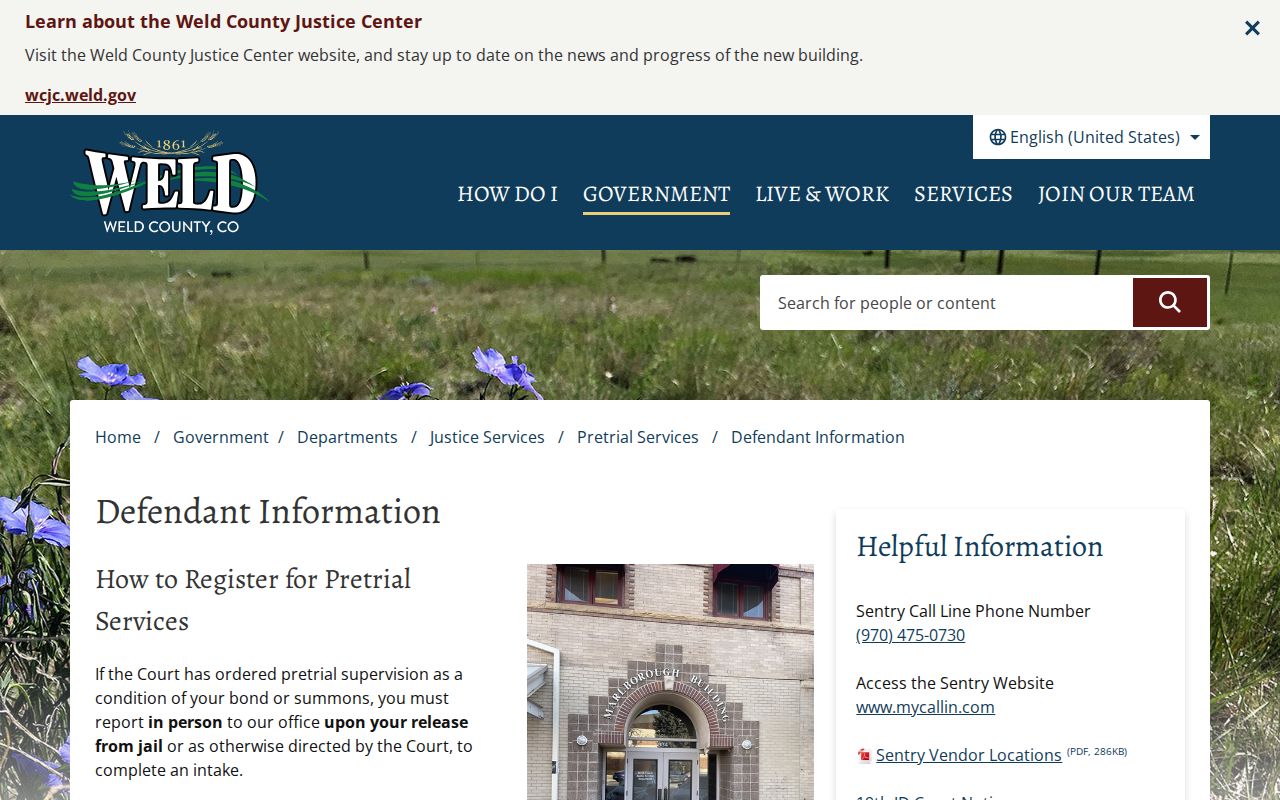
Weld County booking does not close anything. The intake paperwork asks for bond or summons forms and photo ID, and it warns that skipping a report date can trigger a new warrant. Hold onto bond receipts and release papers, and pin down the next court date with the clerk. Portal entries can lag behind service, so written jail and court records still count.
If There's an Arrest Warrant for You
Found out there's a Weld County arrest warrant with your name on it? Call first. Ask the warrant unit to confirm the agency and the status, then reach the issuing court. A lawyer can often set up a walk-through, a bond plan, a court motion, or a scheduled surrender, and only the court itself can recall or quash the warrant.
Do not delay: An active arrest warrant can be served during lawful contact. Get official status and legal advice instead of testing the result in person.
Two Weld County doors handle a warrant, and they do different jobs. The Combined Courts Clerk's Office at 915 10th Street in Greeley handles the case process. The Weld County Jail at 2110 O Street handles booking and bond. Call ahead for no-bond, federal, protected, or out-of-county matters. Cities run their own route too, and the official Greeley Municipal Court page shows how one city court posts its own warrant-clearing contact.
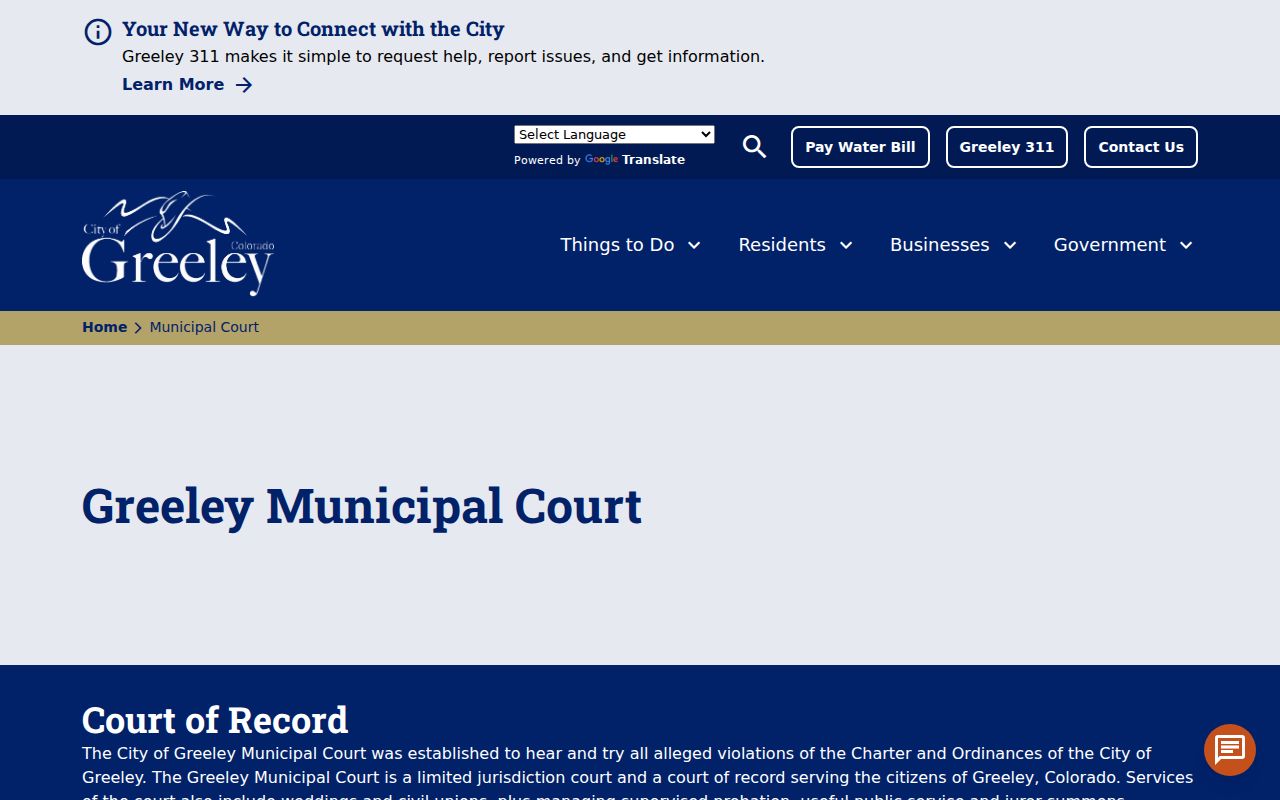
That separate city route in Greeley shows why any Weld County warrant plan starts with naming the issuing court.
Weld Arrest and Bond Confirmation
Read the bail field with care. A Weld County entry can show a dollar amount, NA, zero, or a no-bond style note, and none of that promises payment is accepted. The judge's current order controls, and fees or conditions vary by method. The Greeley Police Department page shows one municipal agency that may serve verified warrants.
Warrant work in Weld County splits in two. City police, the sheriff, and other Colorado officers can each act within their authority. The issuing court still owns the order. Ask that court first. When bond is set, the jail accepts the methods stated in its official instructions, including cash, cashier's check, an authorized online-card route, or surety where allowed. Paying online means supplying the inmate name, birth date, case number, and the full amount. Confirm the live figure first. For the wider picture, the Weld County warrant records home page helps. Afterward, get the next date and written proof of release or recall. Payment or booking alone closes nothing. Note: A sealed indictment or restricted application may stay out of public view until the Weld County court allows access.