
Checking for a Warrant in Longmont
Begin with whatever court is printed on the summons, complaint, or docket notice. The Longmont Municipal Court runs an online portal for payments, name-on-docket checks, and case information. It is not a complete public warrant roster. For a live municipal warrant answer, the court clerk is the source.
- Read the ticket and decide whether it cites a city ordinance or state law.
- Use the Longmont Municipal Court Online Portal for available docket and case details.
- Call Municipal Court at (303) 651-8688 to ask if a city warrant is active and what the judge requires.
- If the case is in Weld, check the sheriff’s known-warrant search and Combined Courts.
- Confirm recall, quash, service, or a new date with the issuing clerk before relying on a portal.
If nothing turns up under Longmont, widen the search to the right county and judicial district. The city spans both the Nineteenth and Twentieth Judicial Districts, depending on the matter.
Longmont’s Municipal Warrant Portal
Treat the city portal as a practical first stop rather than proof that no warrant exists. It covers payment, name-on-docket, and case-information functions. Search using the exact spelling from the summons, then compare the case number, court date, and charge against your paperwork. A missing entry can simply mean a spelling difference, a recent filing, a protected matter, or the wrong court. The Municipal Court FAQ lays out what happens next: a failure to appear may bring a default judgment for a traffic infraction, a warrant for arrest, or both. Once a Longmont warrant may be outstanding, call the court instead of trusting an online payment to recall it. Ask whether the case qualifies for a fine in lieu of proceedings, needs a written motion, or has to go before the judge. Keep your receipt, and get separate confirmation of the warrant's status. The official court page shows the portal Longmont residents actually use.
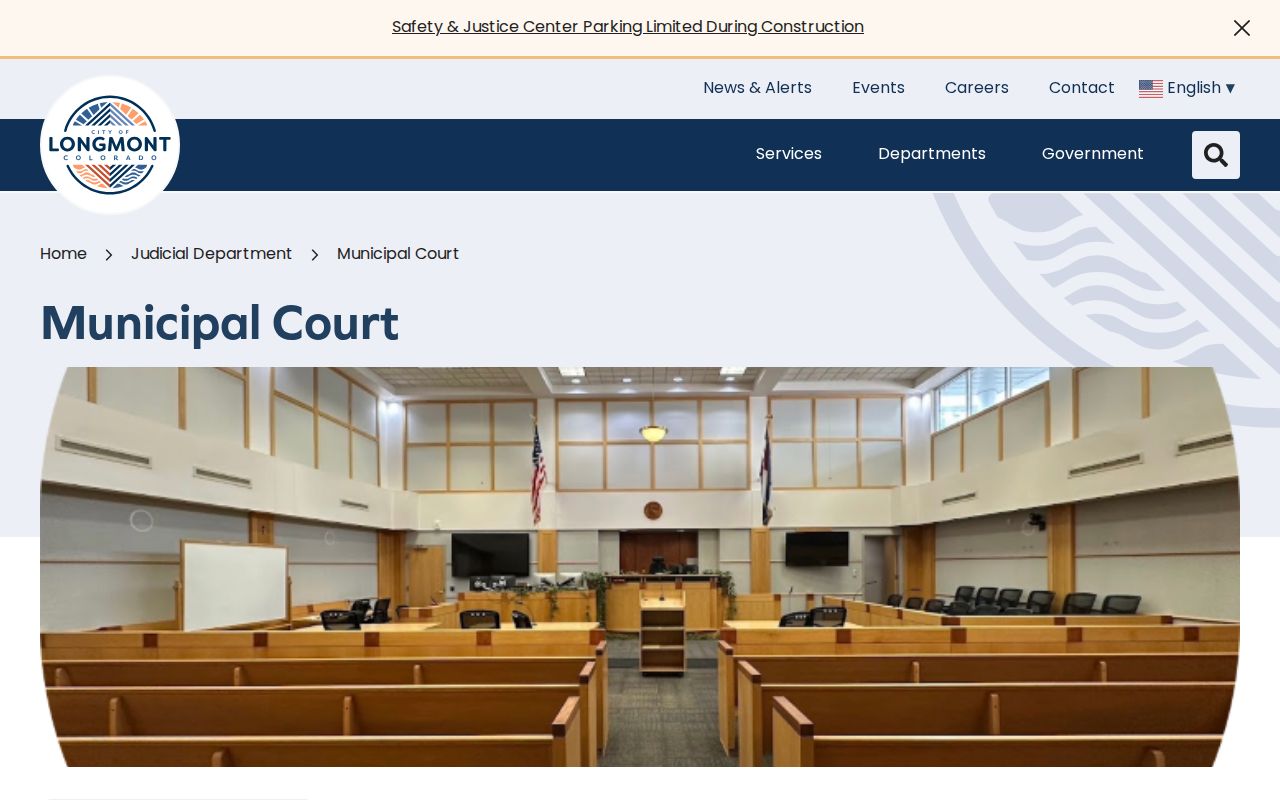
Its case and payment tools help you find the municipal matter. The clerk in Longmont still gives the current warrant answer.
Longmont Police and Municipal Court
Longmont Municipal Court handles alleged violations of city ordinances and municipal traffic rules. You will find it in the Safety and Justice Center at 225 Kimbark Street, Longmont, CO 80501, and the clerk line is (303) 651-8688. Staff can identify the city case, explain filing or payment routes, and say whether a judge must consider recall. Public Safety Records occupies the same building but is a separate office. It manages police and fire records, not the municipal judge's warrant order. Requests can be mailed or brought to the first-floor Records window, and the unit's phone is (303) 651-8502. Active-investigation material may be withheld, and a large review can take weeks or months.
Municipal Court
City docket, summons, payment, motions, appearances, and warrant status.
Public Safety Records
Incident, arrest, police, and fire records subject to access limits.
The Safety and Justice Center source identifies the shared facility:
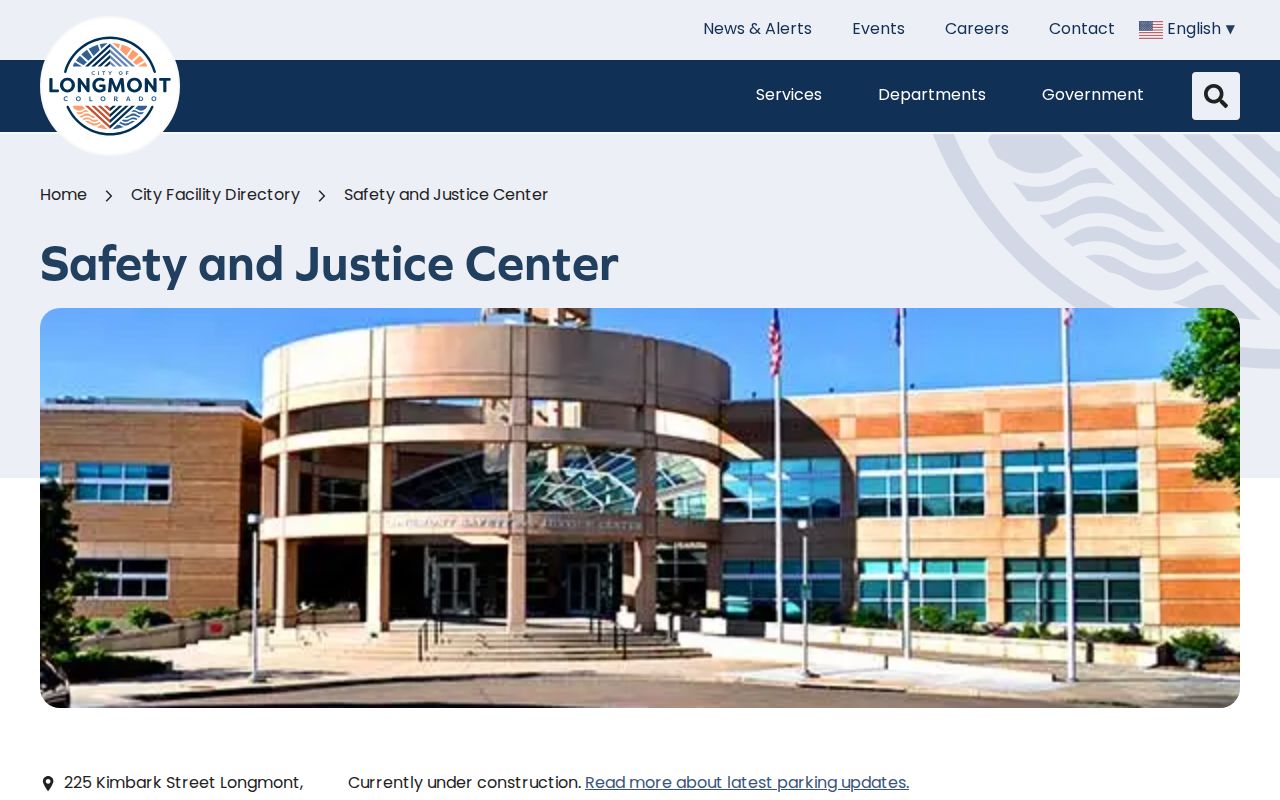
A shared address does not merge the two record systems. Police records staff in Longmont have no authority to recall a court warrant.
Avoiding a Longmont Warrant FTA
The arraignment date sits on the summons or complaint. Skip it, and the result can be a default judgment for a traffic infraction, a warrant for arrest, or both. Longmont's FAQ describes a way to request a continuance before the date instead. File the request at least 24 hours ahead, and send a copy to the City Attorney when required. A request is never automatic, so check the docket or call the clerk to learn whether the date actually changed. For some eligible traffic infractions, a person may plead guilty and pay fines and costs ahead of time as a fine in lieu of proceedings. That depends on the charge, so do not assume it for a mandatory appearance. Once a Longmont warrant has issued, ask whether a motion, a payment, or an appearance before the judge is needed. The rule stays simple: until the court confirms a new date or a recall, the original obligation stands.
Do not miss the distinction: filing a continuance request is not the same as receiving a court order that changes the appearance date.
Longmont Warrant Types
One Longmont label can cover two legal tracks. Municipal Court takes city ordinances and municipal traffic citations. County court handles state traffic laws, and more serious state cases may land in district court. The court field on the ticket decides where to confirm the warrant.
| Type | Typical trigger | Record holder |
|---|---|---|
| Municipal traffic warrant | Missed city traffic date or unresolved eligible citation | Longmont Municipal Court |
| Ordinance warrant | Failure to address an alleged city violation | Longmont Municipal Court |
| FTA or bench warrant | Failure to attend a required setting | The court named on the notice |
| State arrest warrant | Judicial probable-cause finding | County or district court |
A Longmont warrant is a court order. Read it against the underlying case and the current docket.
Longmont’s District Boundary Quirk
Longmont sits in more than one county, with a real Weld County presence. Its own administrative material ties the city to both the Nineteenth and Twentieth Judicial Districts for different judicial matters. That split makes a city-only search prone to error. A state case from the Boulder County side of Longmont does not become a Weld case just because the address says Longmont. Work from the court caption, county, case number, and citation text. When a warrant search or a clerk comes up empty, confirm whether the summons points to Longmont Municipal Court, Weld County Court, or a court in the other judicial district. Municipal cases stay with the city no matter which county portion is involved, while state-law cases follow the proper county court. This boundary quirk is also why a negative Weld sheriff search cannot clear every Longmont possibility.
Inside a Longmont Warrant Record
A portal hit or sheriff result is only a lead, not the file. Before calling, copy details the clerk can use to pull the right case. In Longmont, boundary issues make the issuing court and jurisdiction the fields that matter most.
| Case or warrant number | The record key, represented only as a sample by MC-2026-01234. |
|---|---|
| Name | The subject name; compare other permitted identifiers to avoid a false match. |
| Charge | The alleged ordinance, traffic, or criminal basis, not a finding of guilt. |
| Court | The municipal, county, or district office that controls the order. |
| Bail or fine | Any displayed amount, which the live clerk must confirm. |
| Dates and status | Issue, entry, appearance, active, served, recalled, or quashed information when available. |
Treat a blank search or a receipt as one clue, never proof. For a real answer, ask the Longmont court that issued the warrant directly.
Longmont Warrant Record Custodians
Longmont keeps two record desks, and they do different jobs. The court clerk answers questions about dockets, city case files, settings, and warrant status. The Public Safety Records Unit handles incident and arrest reports. Police and fire records generally fall under the Colorado Criminal Justice Records Act, and active investigations can stay sealed. The Longmont records instructions accept mail or first-floor window requests. Fees apply, card payments carry a 2.95 percent processing fee, and a broad review can run weeks or months. None of that paperwork recalls a warrant. Keep the request narrow, include identifying details, and bring judicial-status questions back to the municipal clerk. Sorting the two channels saves delay in Longmont. It also keeps police-record questions with the proper custodian.
How Longmont Warrants Fit the County System
Warrants in Longmont come from two directions. Longmont Municipal Court issues city warrants, while Weld County Court and District Court issue state-law warrants in their corners. City public-safety officers and other sworn officers may execute a valid warrant. The Weld sheriff search covers the county side, but its jurisdiction dropdown does not list every municipality.
Warrant flow: Longmont Municipal Court or Public Safety › proper county sheriff and court › restricted CCIC/NCIC systems
Colorado posts no single statewide warrant portal. CCIC and NCIC stay inside law enforcement. Try Weld County warrant records for the county angle, then ask Longmont's clerk about anything municipal. Only the issuing court can recall a warrant.
Confirming Longmont Warrant Recall
Paying, filing, or getting a new date starts one question and leaves another. Has the warrant itself been recalled? The case and the warrant are separate court actions. A payment may close an eligible infraction while another charge still needs a judge's order or an appearance. Write down who you spoke with, the case number, the date of confirmation, the next hearing, and any instructions in writing. Ask whether the portal should update and whether a receipt suffices until it does. Give an attorney the exact municipal or county case number. Never test your status at a law-enforcement counter. When arrest risk is real, plan the next step with the Longmont court or your lawyer. Careful records keep a Longmont recall from becoming a surprise later.
- FTA
- Failure to appear at a required court setting.
- Recall
- A judge’s withdrawal of the warrant.
- Default judgment
- A ruling entered after nonappearance in an eligible matter.
- Continuance
- A court-approved change to a scheduled date.
Longmont Warrant Records and Public Access
Longmont records travel on three separate tracks. CORA covers city administrative records, while CCJRA governs criminal-justice materials. Judicial Branch access rules control state court files, and the municipal clerk sets access to Longmont city court records. Sealed, juvenile, protected, and active-investigation files may simply be unavailable.
Key rules:
Colorado Open Records Act, C.R.S. §§ 24-72-201 et seq. provides the general public-record framework.
C.R.S. § 24-72-305 permits limits on criminal-justice inspection when disclosure is barred or contrary to the public interest.
Chief Justice Directive 05-01 addresses access to Colorado court records.
Public warrant information can be thin or stale. Use it to sort out your own or a relative's matter, then verify with the Longmont court at the source.
Longmont Access Before a Visit
Longmont's Safety and Justice Center posted a closure for construction from August 24 through September 8, 2026, with reopening on September 9. Facility notices change, so call before any trip. Ask which entrance, window, and service hours apply that day. The court also offers interpreter and accessibility help. Raise those needs early, especially when a motion or appearance has a deadline. A closed building does not erase a court setting unless the court says so. Confirm how filings are accepted during a disruption. Keep proof of timely delivery. A filing, a police-record request, and a warrant-status call move through separate channels even when they share a Longmont address. That distinction matters more than the building's name.